
Shaping the Future of Science
Education. Discovery. Innovation.


$
26,481,450
AWARDS RECEIVED IN FY 2023
1,988
Students
88
%
1st year retention rate of Fall 2022 student cohort



In the News
Space Daily
Astronomers have been captivated by the recent identification of what might be a novel category of "free-floating" planets, unveiled through remarkable images from the James Webb Space Telescope. These planets, named Jupiter-mass Binary Objects (JuMBOs), appear to orbit each other without being tethered to any star, challenging long-held beliefs about planetary system formation.
Space
At the end of 2023, astronomers made a startling discovery in the Orion Nebula. Using the James Webb Space Telescope (JWST), the team found 40 pairs of planetary mass objects — none of which orbit a star. They're called Jupiter-Mass Binary Objects, or JuMBOs.
Anchorage Daily News
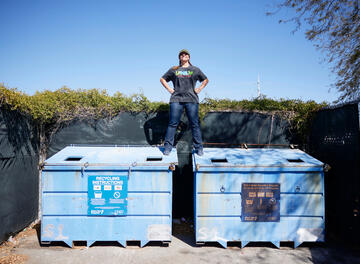
A video posted to social media this month captured two men destroying ancient rock formations at Lake Mead National Recreation Area in Nevada. National park rangers are asking for the public’s help in identifying the visitors, who could face federal charges for vandalizing protected land.

Matthew Lachniet
Professor of Geology
Accomplishments
Matt Sheridan and Ao Li (both Chemistry and Biochemistry) published their research paper, "Reversible Amine-to-Imine Chemistry at a Covalent Organic Framework for Sustainable Uranium Redox Separation," in the journal of ACS Sustainable Chemistry and Engineering. This publication is a collaboration…
Jessica Grifaldo (Life Sciences), Erin Cassin (Life Sciences), Dengxun Lai (Life Sciences), Landon Netherton (Life Sciences), Efren Heredia (Chemistry), Ryan Doss (Life Sciences), and Monika Karney (Life Sciences) all won prizes for their oral or poster presentations at the Regional American…
Experts

Professor, UNLV Department of Geoscience
Carrie Tyler is a marine conservation paleobiologist.

Professor of Geoscience
An expert in Mars geochemistry, astrobiology, water-rock interactions, and snow dynamics.
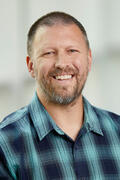
Associate Professor, School of Life Sciences
An expert in ecology, fire management, and U.S. National Parks.