College of Sciences E-newsletter

June 2007

In this issue:

Back to E-Newsletter Directory


Salvaging Power from Your Exhaust: UNLV Scientists Team with GM to Turn Waste Heat into Electricity

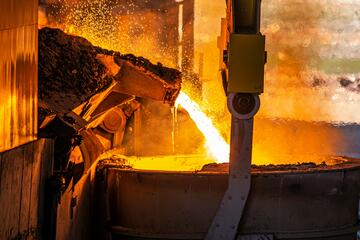
As fuel prices rise, along with worries over pollution and global warming, scientists are looking at ways to make use of the heat that shoots out the tailpipes of our cars and trucks. A team led by Changfeng Chen, professor of physics at the University of Nevada–Las Vegas, is using the leadership computers at the National Center for Computational Sciences (NCCS) to investigate thermoelectric materials with the potential to route some of that energy back to the vehicle.

Chen’s team is working with scientists from General Motors (GM) and Brookhaven National Laboratory to design materials that turn the heat into electricity that can then be used to recharge the vehicle’s battery or power some of its systems. In particular, Chen and his team are using NCCS systems to perform first-principles simulations of the materials. Their simulations will be coordinated with experiments being done by the scientists at GM and Brookhaven. “We will be running simulations not just to support the experiments,” Chen explained, “but to provide guidance for the materials as well.”

The team has a 500,000-hour allocation on the center’s Cray XT4 Jaguar system, and Chen made it clear he and his colleagues would like a long-term relationship with the NCCS. “We’re very happy that we have access to this state-of-the-art computer,” he said. “Without access to this computer, we cannot run the calculations, period.”


Back to Top


Dennis Bazylinski Receives National Science Foundation (NSF) Grant, "Effects of Environmental Growth Conditions on the Composition and Morphology of Bacterial Magnetosome Crystals and on the Subsequent Dissolution and Preservation of Magnetofossils,"

Dennis Bazylinski, associate professor in the School of Life Sciences, has received a National Science Foundation grant ($314,056) to study magnetotactic bacteria (MB), a group of bacteria containing iron mineral crystals in intracellular structures, called magnetosomes, which enable the bacteria to orient and migrate along magnetic field lines. These bacteria may have significant roles in biogeochemical cycling, or the  exchange between biologic, geologic, and chemical aspects of the environment.

ABSTRACT: Magnetotactic bacteria (MB) are a metabolically and morphologically diverse group of gram-negative prokaryotes in the Domain Bacteria. Cells of MB biomineralize intracellular membrane-bounded crystals of the magnetic minerals magnetite (Fe3O4) and/or greigite (Fe3S4) via a biologically-controlled mineralization process. These structures, called magnetosomes, cause cells to align along geomagnetic field lines as they swim and appear to work in conjunction with aerotaxis in aiding cells in locating and maintaining an optimal position in vertical chemical (e.g. oxygen)/redox gradients. Based on their high cell numbers in natural habitats and the biogeochemical transformations they catalyze, MB are a significant environmental bacterial group that potentially have major roles in the biogeochemical cycling of Fe, S, N, and C. When MB cells die and lyse, their magnetosome crystals are presumably released into the surrounding environment and eventually end up in sediments where they appear to be preserved for some time as putative "magnetofossils". Magnetofossils have been found in a large number of recent marine and lacustrine sediments as well as in some ancient sediments and meteorites (i.e., Mars meteorite ALH84001) where they have also been used as evidence for the past presence of MB, as indicators of life, and as indicators of recent/ancient environmental conditions. The use of these crystals as magnetofossils is based on a number of chemical, crystallographic, and magnetic criteria while their use as environmental indicators is based on a small number physiological experiments performed on only a few species. Little is known about the conditions under which MB synthesize Fe3O4 and under which magnetosome Fe3O4 crystals are dissoluted or transformed to other minerals when they are released into the environment. It is presently clear, however, that high concentrations of O2 inhibit magnetite synthesis in MB and cause the oxidation of magnetite magnetofossils and that Fe3O4 magnetosomes can be synthesized anaerobically by some MB.

The major goal of the research outlined in this proposal is to determine whether different morphological types of Fe3O4 crystals can be reliably used either as magnetofossils (evidence for life) or as environmental indicators. To do this, we will: 1) examine the environmental conditions under which a relatively large number of strains of MB that synthesize Fe3O4 of different crystal morphologies; and 2) examine the conditions under which the Fe3O4 crystals are supposedly dissoluted, transformed, and/or undergo reductive diagenesis (e.g., investigate the effect of reducing agents, siderophores etc.). Research results from this work should advance knowledge in Microbiology, Geology, Chemistry, Environmental Sciences, and Astrobiology. They should also advance discovery and learning for the general public who are somewhat familiar with Martian meteorite ALH84001 and the evidence for life on ancient Mars. This is especially important now: recent studies and debates, some viewed by the public, involving meteorites and ancient rocks from Earth show that we need clear unambiguous biomarkers as evidence for life in fossils on Earth and well as in extraterrestrial habitats and materials. In addition, Fe is a key element to life and is often a limiting nutrient particularly in marine systems. Results from this research may reveal previously unknown aspects of Fe cycling (e.g., microbial Fe3O4 reduction and oxidation) in such habitats and the role of specific bacteria in this cycling.

Back to Top


Archaea In Hot Springs Use Ammonia For Energy: May Shed Light On Early Evolution

Science Daily — Discovered in the late 1970s, archaea are one of the three main branches on the tree of life, with bacteria and eukaryotes such as plants and animals on the other two branches. But scientists are just now gaining a fuller understanding of what archaea do -- in an ecological sense -- to make a living.

Hot Springs

One of the sampling sites, a series of hot springs known as 'The Three Buddhas' in Nevada. (Credit: Image courtesy of University of Georgia)

A new study led by University of Georgia researchers and announced on Wednesday at the American Society for Microbiology meeting in Toronto finds that crenarchaeota, one of the most common groups of archaea and a group that includes members that live in hot springs, use ammonia as their energy source. Chuanlun Zhang, lead author of the study and associate research scientist at UGA's Savannah River Ecology Laboratory, said such a metabolic mode has not been found in any of the other known high-temperature archaea. "The oxidation of ammonia was not thought to be a dominant process for crenarchaeota, but now we realize how important it is," said Zhang, who is also associate professor of marine sciences. His co-authors include researchers from the University of Nevada Las Vegas, Montana State University, Savannah River National Laboratory, Harvard University and Yunnan University in China.

Zhang and his colleagues (Christopher Bagwell, SRNL; Brian Hedlund, UNLV; Bill Inskeep, MSU; WenJun Li, Yunnan University; Ann Pearson, Harvard; Christopher Romanek and Juergen Wiegel, UGA) sampled extensively from hot springs in the United States, China and Russia for crenarchaeota and found the widespread distribution of the presumed amoA genes, which microorganisms use to combine ammonia with oxygen, releasing useable energy. Previous studies by other teams used a DNA-based forensic ecology approach to suggest crenarchaeota's role in converting ammonia in mundane environments such as sea water, soil and even waste treatment plants. Zhang said the results of this latest comprehensive study give a picture of the ecological role of crenarchaeota in more extreme environments such as the hot springs.

Because ammonia-oxidizing archaea are associated with a group of microorganisms that thrive in hot spring environments that are thought to resemble early conditions on Earth, Zhang said they may help scientists better understand the earliest stages of evolution on the planet. "If we want to know how organisms evolved and how their metabolism evolved, we need to understand both the hot springs environment and the low-temperature environment," said Zhang. "Crenarchaeota are special because they thrive in both environments."

Note: This story has been adapted from a news release issued by University of Georgia.

Back to Top


Faculty, Students Honored for Outstanding Contributions to Research and Service

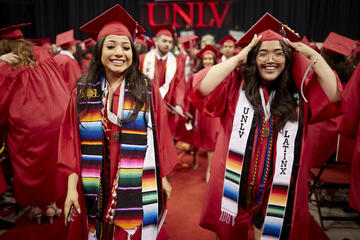
UNLV President David B. Ashley and representatives from the Nevada System of Higher Education (NSHE) marked Academic Recognition Month recently by honoring several outstanding faculty and students for their contributions to the university during the 2006-07 academic year.

Assistant Professor of Geoscience Matthew Lachniet and Associate Professor of English Stephen Brown were the recipients of this year’s Barrick Scholar Awards, which recognizes faculty members for distinguished research and excellence in the area of creative activity. The awards are funded by long-time UNLV supporter Marjorie Barrick and are made following recommendations from a committee of former recipients.

Lachniet’s research on paleoclimatology–the study of Earth’s climatic history–is focused on the rarely studied tropical climate of Central America and has improved the scientific community’s understanding of long-term climate change and its impact on global warming.

Read the full text:

Back to Top


International Conference on Non-marine Basin Systems: Depositional Processes and Products, Stratigraphy, and Petroleum Reservoir Exploration

Associate professor of geoscience Andrew Hanson recently returned from a 12 day trip to Beijing, Chengda, and Ya'nan, China.  He served as a vice-chair for a meeting entitled "International Conference on Non-marine Basin Systems: Depositional Processes and Products, Stratigraphy, and Petroleum Reservoir Exploration." He co-chaired a session on "Distribution and Controls on Fine-grained Facies: Petroleum Sources and Seals in Non-marine Basins," and presented an invited talk entitled "Hydrocarbon Source Rocks in Non-marine Basins: Insights from Chinese Basins" and participated in two field trips that were part of the conference.


Back to Top


Professor Peter Starkweather Appointed Interim Dean of Honors College

The Office of the Executive Vice President and Provost is pleased to announce that Dr. Peter Starkweather of the School of Life Sciences has accepted the position of Interim Dean of the Honors College. Dr. Starkweather received his Ph.D. from Dartmouth College in 1976; he joined the UNLV faculty in 1978.  Since that time, his research has largely centered on zooplankton ecology and evolution.   His administrative leadership qualities have been evident in previous appointments: as Chair of the Department of Biological Sciences (now the School of Life Sciences), as Associate Dean and Interim Dean of the College of Sciences and in a wide range of specific tasks and committee work undertaken on behalf of the faculty. In addition, throughout his UNLV career, Dr. Starkweather has continuously offered courses through the Honors College and provided campus leadership in support of high quality student programs.  With great confidence in Dr. Starkweather, we are convinced that he will represent the interests of the faculty and students of the Honors College with much skill. 

Read the full text:  

Back to Top


National Institutes of Health Fund UNLV Research on Genetic Mutations

New research being conducted at UNLV may explain whether certain cellular mechanisms enhance the generation of genetic diversity, including both beneficial and harmful mutations. The study may also provide insight to the generation of cancer as well as cell aging and growth in conditions of stress.

The National Institutes of Health (NIH) recently awarded Eduardo Robleto, UNLV assistant professor of life sciences, a $222,000 grant to investigate whether the presence of the gene mfd, or mutation frequency decline, increases the rate of mutation through increases in transcription in Bacillus subtilis - a common bacterium used in laboratory studies for its amenability to genetic manipulation. Robleto suspects that in nutrient-deficient conditions, such as amino acid starvation, the level of and mistakes in DNA transcription correlates to an increased accumulation of mutation. These two transcription features may be affected by mfd, which would provide a direct connection between mfd and mutation.

During the three-year project, Robleto and a team of undergraduate students will conduct experiments to test this hypothesis. First, Robleto will manipulate transcription levels in Bacillus subtilis during its stationary phase – or the phase during which cell growth slows or stops because of nutrient depletion – ¬and then measure the transcription and mutation rates in cells containing mfd and those that are mfd-deficient. Second, Robleto and his team will investigate whether mfd, which typically aids in the repair of DNA damage, facilitates a process called transcriptional bypass, which could lead to genetic mutation in cells in stationary culture.

"This research could help explain how beneficial mutations occur in some organisms and tumors occur in others," said Robleto. "The results are crucial to our understanding of evolutionary processes and may someday lead to strategies that could regulate cancers and other developmental diseases."  Although Robleto's research is being done on bacteria, transcription-associated mutagenesis and the mfd-like gene in humans have been suspected in the generation of mutations in p53, a gene commonly associated with a variety of cancers in humans.

Previously, Robleto and a team of researchers from UNLV and the University of Guanajuato in Mexico demonstrated that the absence of mfd had a depressive effect on the ability of cells to accumulate mutations during stationary phase. Those results were published in the November 2006 issue of the Journal of Bacteriology. Other UNLV researchers involved in the project include Ron Yasbin, co-principal investigator and dean of UNLV’s College of Sciences.

Back to Top


2007 Rossi Prize of the High Energy Astrophysics Division (HEAD), American Astrophysics Society (AAS)

Bing Zhang, assistant professor of physics and astronomy at UNLV, and a member of the Swift Team, a group of astrophysicists working with NASA to study gamma ray bursts (GRBs) has received yet another scientific award. The 2007 Rossi Prize of the High Energy Astrophysics Division of the American Astronomical Society is awarded to Neil Gehrels and the Swift Team for major advances in the scientific understanding of gamma-ray bursts. These include groundbreaking observations to determine precise location of short gamma-ray bursts, and the discovery of enormously bright X-ray flares in the early afterglows.

The High Energy Astrophysics Division (HEAD) of the American Astronomical Society (AAS) assists and promotes the advancement of research and the dissemination of knowledge about high energy events, particles, quanta, relativistic gravitational fields, and related phenomena in the astrophysical universe.  HEAD also promotes the coordination of this research and knowledge with other branches of science.  Each year, HEAD awards the Rossi Prize for recent original research in High Energy Astrophysics. The Rossi Prize is awarded annually in honor of Bruno Rossi ``for a significant contribution to High Energy Astrophysics, with particular emphasis on recent, original work.'' The prize includes a cash award, a citation, and an invited lecture by the recipient at a meeting of the Division. This is usually a plenary talk to the AAS at its January meeting.

Back to Top


Las Vegas Isotope Science Laboratory Now Open

The laboratory is equipped with state of the art stable isotope mass spectrometer and peripheral devices which include ThermoElectronDelta V Advantage Mass Spectrometer, Kiel IV automated carbonate preparation device, CostechNA 2000 Elemental Analyzer, and ThermoElectronHigh Temperature Conversion Elemental Analyzer (TC/EA). Both the CostechNA 2000 and the TC/EA are interfaced to the mass spectrometer through the Conflo III system. The laboratory is capable of analyzing carbonate samples, organic matter, water samples for isotope and elemental analysis. The system is configured through the ISODAT III software for a rapid automated high precision analysis of isotope ratios of 18O/16O, 13C/12C, 15N/14N, and D/H generated from a wide variety of geological and biological materials.

Contact Information: Las Vegas Stable Isotope Laboratory, Department of Geoscience, University of Nevada, Las Vegas, 4505 Maryland Parkway, Las Vegas, NV 89154-4010. Room: TEC 119; Telephone: Lab: (702) 895-4493; Main office: (702) 895-3262; Fax: (702) 895-4064; Lab Directors: Matthew.Lachniet@unlv.edu, Phone: (702) 895-4388; Ganqing.Jiang@unlv.edu, Phone: (702) 895-2708; Lab Manager: Million.Hailemichael@unlv.edu, Phone: (702) 895-3595.

Back to Top


School of Life Sciences Graduate Student Achievement, 2006-2007

A new publication, School of Life Sciences Graduate Student Achievement, 2006-2007, is available at: http://sciences.unlv.edu/publications.html

This publication includes information on School of Life Sciences’ graduate student publications in peer-reviewed journals, scholarship and fellowship support, presentations at professional meetings, and outreach and community service activities.

Additional links to this publication are available on the Prospective – Graduate Students webpage: http://sciences.unlv.edu/prospectiveGrad.html and the Current - Graduate Students webpage: http://sciences.unlv.edu/currentGrad.html.

Back to Top


Outstanding High School Juniors in Mathematics Dinner, May 16, 2007

On the evening of May 16th the College of Sciences hosted approximately forty outstanding high school math students at a dinner held at the Stan Fulton Building. Area high school teachers each selected a top junior math student, who in turn invited his or her teacher and two guests. Faculty and staff from the College of Sciences were joined by administrators of the Clark County School District and invited guests to honor these dedicated students. Assistant professor of Mathematic Daniel Kern delivered a brief talk on mathematical models and presented his research on the spread of invasive salt cedar plants as an example of how applied mathematics – and mathematicians – contribute to a wide range of scientific research.


Back to Top


Outstanding High School Juniors in Science Dinner, May 23, 2007

On the evening of May 23rd the College of Sciences hosted approximately forty outstanding high school science students at a dinner held at the Stan Fulton Building. Area high school teachers each selected a top junior science student, who in turn invited his or her teacher and two guests. Faculty and staff from the College of Sciences were joined by administrators of the Clark County School District and invited guests to honor these dedicated students. Assistant professor n the School of Life Sciences Frank van Breukelen delivered a brief talk on metabolic depression (hibernation) and presented his research on mammalian hibernation in golden-mantled ground squirrels, noting potential implications for the treatment of the human body when under great stress.

Back to Top


Southern Nevada Mathematics Council (SNMC)

The Southern Nevada Mathematics Council (SNMC) is a professional organization promoting active interest in mathematics and mathematics education.  A local affiliate of the National Council of Teachers of Mathematics (NCTM), SNMC works in affiliation with the Nevada Mathematics Council in assisting state-wide communication among northern, southern, and rural mathematics teachers in order to provide continuity in promoting mathematics and mathematics education.  

UNLV provides scholarship support for the winners of the SNMC’s annual mathematical competitions. Students receiving awards this year include three recipients with close ties to the College of Sciences:

Michael Chen, first place Algebra I exam; (son of Changfeng Chen, professor, Physics and Astronomy)

Seth Thompson, first place, Algebra II exam; (son of Daniel Thompson, associate professor, School of Life Sciences)

Allen Yu, first place, Geometry exam; (son of Zhongbo Yu, associate professor, Geoscience)

Kevin Kowalski, first place, Comprehensive exam (Kevin has won a first place in this category for four consecutive years)

Back to Top


"UNLV Brushes Up On What Students Should Learn: President Orders Review, More Challenging General Education Classes," by Christina Littlefield, Las Vegas Sun, May 4, 2007

"Even as he tries to elevate UNLV as a research institution, President David Ashley wants to reexamine whether his undergraduate students are getting the most appropriate fundamental education… Among the options are to develop introductory courses, such as a science class to introduce nonscience majors to the scientific method and critical thinking skills necessary to understand national issues such as global warming and stem cell research, said Ron Yasbin, dean of the College of Sciences."

Read the full text

Back to Top


"Senate Steps Toward Science: New Act Promotes Technology in U.S.," by Nur Kausar, Rebel Yell, May 3, 2007

On April 25 the U.S. Senate passed legislation known as the America COMPETES Act to promote research in math, science, technology and engineering and make the United States more competitive in these fields. "Even though we've always led the way in innovation, without this bill we risk losing our competitive edge to China and India," said Sen. John Ensign, R-Nev. in a press release.

The senator worked with Senate Majority Leader Harry Reid, D-Nev. to push the bill in Congress, which calls for the federal government to provide funding from its treasury to the National Science Foundation, which would in turn award grants to schools to further their research in these subjects. According to Ensign's Deputy Press Secretary Don Tatro, the bill authorizes $73 million over four years for the NSF to award grants to four-year institutions. States such as Nevada will receive preference because of their low percentage of citizens with graduate or professional degrees as determined by the U.S. Census Bureau.

According to the 2006 U.S. Census Bureau statistics, only 21 percent of Nevada citizens in 2005 had a bachelor’s degree or higher. Tatro said the bill also authorizes $125 million for Fiscal Year 2008 for the Experimental Program to Stimulate Competitive Research (EPSCoR) program at NSF to stimulate improvements in the quality of academic research undertaken in several states, including Nevada. Funding for the NSF will double as a result of America COMPETES, which helps the goal of this bill because NSF is a lead federal agency in funding basic research at universities around the country, Tatro said via email.

Faculty in the UNLV College of Sciences receive approximately $13 million in peer-reviewed federal grant funds per year from agencies such as the NSF, the National Institute of Health and the U.S. Department of Energy. According to Ron Yasbin, dean of the College of Sciences, however, only about 10 percent of proposals from faculty researchers get funded. Faculty in the college are currently researching life in extreme environments, geophysical forces in nature such as earthquakes, high pressure and handling nuclear waste, among other things, Yasbin said, which are all important issues to the state. "It's critical that we get funding for good proposals, especially for young faculty because we don’t want to turn them off from research,” Yasbin said.

"The importance of research and development for America is undeniable," he added. "It’s a national security issue – if we don’t have the best science then someone else might and it might be someone who shouldn’t have it.” Yasbin mentioned how former President Bill Clinton had pushed for increasing research and development during his presidency, but since then, the budget for it has stagnated. "Money for the sciences is never enough, but we have to be citizens, too," Yasbin said, noting that the country is running in the deficit. Then again, events such as the biomedical revolution in the last 20 or 30 years came about as a result of research grants, he said.  The authorization period for the bill is between Fiscal Year 2008 and 2011, with thousands of grants available, and the bill could be reinstated, according to Tatro. Additionally, the bill authorizes the NSF to provide Graduate Research Fellowships to an additional 1,250 students from Fiscal Year 2008 through 2011.

Yasbin said getting students interested in the sciences is vital also so a new generation can come out of college to teach K-12 in the subjects. "We’re trying to attract as many students as we can, but it’s still not enough to fill America's needs," he said. "That’s why companies hire people from other countries, because our kids aren’t entering these fields." Two studies provided background to enable legislators to decide whether the bill should pass and why such a program is necessary to increase competition. The first was the National Academies' Rising above the Gathering Storm report and the second was the Council on Competitiveness' Innovate America report, Tatro noted.

Back to Top


Conference on Normal Tissue Radiation Effects (CONTRE), July 12-14, 2007

The International Conference on Normal Tissue Radiation Effects, July 12-14, 2007, in Las Vegas, Nevada focuses on the effects of radiation on normal tissues. The biannual CONTRE will deal with both low-dose and high-dose radiation effects and post-exposure survivorship issues. Meeting sponsors include: the Nevada Cancer Institute, University of Nevada, Las Vegas, Nevada Development Authority, and Quest Diagnostic Laboratories.

Register at: http://www.nevadacancerinstitute.org/contre/contre.html

Back to Top


Physics and Astronomy Seminars

On Wednesday, April 11, 2007 Professor Rene Oudmaijer from the University of Leeds, England delivered a seminar entitled, "Pre-Main Sequence Stars Probed at High Resolution: Disks, Outflows and Binaries."

On Thursday, April 12, 2007 Dr. Dale A. Frail, Assistant Director Science and Academic Affairs, National Radio Astronomy Observatory presented a talk entitled, "The Hot and Cold Universe."

Abstract: In the next decade two major facilities will come on line at radio,  millimeter and sub-millimeter wavelengths which are capable of studying the cold, obscured Universe and the hot, relativistic Universe. The Expanded Very Large Array (EVLA) and the Atacama Large Millimeter Array (ALMA) will have order of magnitude or more improvements in sensitivity, frequency range and resolution, and angular resolution. He broadly described the science capabilities of EVLA and ALMA and provided an update of the status of both of these projects. (Much of the work on these two projects is being done at NRAO in Socorro, a short 500 miles from Las Vegas.

On Thursday, April 26, 2007, Dr. Sergey Tkachev, Carnegie Geophysical Institution in Washington DC presented a seminar entitled, "Tools for Brillouin and Raman Scattering Techniques: Studies of C-BC2N and Proton Diffusion in Ice VII."

Abstract: This paper examines two new approaches in carrying out measurements using Brillouin and Raman scattering spectroscopy for two different materials: superhard nanocrystalline bulk cubic BC2N and ice VII. The characterization of the bulk and shear moduli of the second in hardness after diamond material was carried out by Brillouin scattering spectroscopy, and the results were already published. A concept of studying the diffusion of protons in ice VII by carrying out the in situ Raman measurements will be presented for the first time. These approaches are not related to each other. However, the unconventional use of the well-known techniques is what unites these two projects.

Back to Top


Special Seminar

David Brookshire (Director of the Science Impact Laboratory for Policy and Economics, University of New Mexico) and David Goodrich (Senior Research Hydraulic Engineer, USDA/Agricultural Research Service, Tucson, AZ) spoke on "Integrated Science, Modeling and Ecological Decision-Making in the Upper San Pedro Basin, AZ" in the EPA Executive Auditorium (944 Harmon Ave, across the street from Lied Library) on Wednesday, May 16, from 1:30 to 2:45 pm.

Professor Puru Jena from Virginia Commonwealth University presented a talk entitled "Materials Issues in a Hydrogen Economy" on Tuesday, May 29, 2007 in CHE-101

Back to Top


Upcoming Seminars

The College of Sciences has established a listserve to better publicize and promote scientific seminars offered throughout the academic year. For more information on upcoming seminars and to subscribe to the listserve, please visit: http://cmse.unlv.edu/seminar/.

Back to Top


Submit Your News Stories

The College of Sciences E-Newsletter is published on or about the first of each month. Please submit news items via email by the fifteenth of each month, for consideration. You may send your submissions to: Bill Brown, Director of Development william.brown@unlv.edu.

Back to Top


Related Links


Get Adobe Reader