College of Sciences E-newsletter

November 2007

In this issue:

Back to E-Newsletter Directory


UNR, UNLV and DRI Involved in Lunar and Mars Mission Research, KRNV TV, Reno)

http://www.krnv.com/Global/story.asp?S=7184005

NASA's ambitious exploration effort to return humans to the surface of the Moon and provide a continuous robotic presence on Mars is receiving a critical boost from Nevada scientists. Researchers from the University of Nevada, Reno, the University of Nevada, Las Vegas (UNLV) and the Desert Research Institute (DRI) were chosen to enhance the operational and scientific success of future missions to the Moon and Mars. The collaborative project is funded through a $750,000 grant from NASA and equivalent matching funds from the Nevada NASA EPSCoR (Experimental Program to Stimulate Competitive Research) program for a total of $1.5 million. The funding will help develop a center of excellence in planetary surface process research and education, and will align efforts to build on existing strengths of the researchers in the fields of geomorphology, geology, microbiology, geochemistry, atmospheric and hydrologic processes and remote sensing.

Statewide research will be brought together in an advanced visualization and modeling environment that will include many of the features of DRI's "CAVE" (Computer Automated Virtual Environment) facility. The new immersive virtual reality facility will help bring to life lunar and Martian land surfaces through high-resolution, 3D video and sound. The virtual experience will allow researchers to test both scientific hypotheses and instrumentation for lunar and Martian exploration. The effort is coordinated by Chris Fritsen, EPSCoR program manager and associate research professor at DRI. Wendy Calvin, associate research professor in the Mackay School of Earth Sciences and Engineering at the University and longtime participant in NASA's Mars Exploration program, is the science proposal's principal investigator.

UNLV professors Brenda Beck (geoscience) and Spencer Steinberg (chemistry), as well as University professors Fred Harris (computer science and engineering), Sergiu Dascalu (computer science and engineering) and Scott Bassett (geography) and DRI's Nicholas Lancaster (senior director of the Center for Arid Lands and Environmental Management) and Henry Sun (assistant research professor) are also part of the statewide research team.  "We will be using two planetary analog sites (one at Lunar Crater Volcanic Field in southern Nevada and the other in the Mojave Desert in California) to develop the new virtual reality facility," Calvin said. "These ‘field labs' will be used to train a new generation of investigators in terrestrial geosciences, the interpretation of image and other data from NASA planetary missions, and mission planning and operations for future manned and robotic surface exploration of the Moon and Mars." Calvin said the new facility, the first of its kind used for planetary exploration and visualization, will be used to predict planetary surfaces and terrain characteristics crucial for the mapping of landing sits and access routes to surface targets.

"It's going to play a very important role in helping the research team visualize what a Mars Rover landing or a human lunar landing would be like," she said. Experiments conducted at the analog sites will emphasize understanding the links between microbiology, mineralogy and oxidation in a dry, desert environment. In addition, studies of controls on sediment transport and implications for rover trafficability will be undertaken. "Brenda Buck and UNLV's geoscience department has long been at the forefront of arid soils research, and now, along with her colleagues from UNR and DRI, will use some of Nevada's unique environmental resources to train our state's students to explore new worlds while further expanding what we know about our own," added Ron Yasbin, dean of UNLV's College of Sciences.

Back to Top


Fall 2007 College of Sciences Newsletter

The Fall 2007 edition of the College of Sciences Newsletter is available in print and can also be viewed electronically at: http://sciences.unlv.edu/pdf/newsletters/newsletterfall2007.pdf

This issue includes stories and news items on such topics as several research grants acquired by faculty members, undergraduate research opportunities, a scholarship endowment from the Andre Agassi Foundation, new faculty members, faculty and student awards, a welcome to our new executive vice president and provost Neal Smatresk, and progress on the Science and Engineering Building,

Back to Top


"Building Budget Increases: Delays, Inflation Affect New Center for Science, Engineering and Technology," by Gregan Wingert, Rebel Yell, October 1, 2007

http://www.unlvrebelyell.com/article/
2007/10/01/building-budget-increases/

Dean Ron Yasbin and associate dean for facilities Rod Metcalf were interviewed for a Rebel Yell feature article on the construction of the Science and Engineering Building.

Over budget and overdue, the Science, Engineering and Technology building is now slated for completion in March. The university originally proposed a cost of $60.5 million, which rose in 2002 when the Nevada State Public Works Board projected the cost to be $75 million. With additional costs, construction and inflation over the last four years, Director of Planning and Construction Susan Hobbes said the total projected cost is now $133.1 million. "UNLV has contributed $32 million toward the project and the state has put up the rest of the money," Hobbes explained. Construction for the approximately 200,000 square foot building, located near the parking garage on the north side of campus, began in the summer of 2005. SET was scheduled for completion later this year but the board granted an extension until March 15. "The end date has been all over the place," Hobbes said.

College of Sciences Dean Ron Yasbin explained that escalation in the price of building materials, which is due to an increase in demand by countries such as China, caused some delay in construction. SET will be the first building on campus certified with a Leadership in Energy and Environmental Design stamp. "It’s far more sophisticated than building a house or the Student Union even," Yasbin said. Hobbes added, "It’s energy efficient and the building implements a lot of sustainable design elements." Natural lighting, energy efficiency, water conservation and using recyclable and locally bought materials are just a few environmentally friendly elements being incorporated into the building. The architectural design "merges the notion of living in the natural desert with technology," Dr. Rod Metcalf, the College of Science’s associate dean for facilities, said.

The building is primarily for the College of Sciences and the College of Engineering. However, the building will have a fine arts component with the inclusion of the university’s new entertainment engineering program. "[SET] is a building where interdisciplinary research can take place," Hobbes said. "When you have an engineering college joining forces with a fine arts college, who know what’s going to be the outcome?" American Society of Civil Engineers President Vik Sehdev said. Sehdev explained that the entertainment engineering program will produce high-tech spectacles found in various Vegas shows and productions. Metcalf said interdisciplinary research is meant to "develop a new synergy where [researchers] can benefit from each other’s backgrounds and training, and hopefully start some new fields of research in science and engineering." Metcalf has been involved in the project since 2002. He toured other science and engineering facilities around the country and collaborated with other personnel involved with planning. "To let [researchers and students] have an opportunity to interact with one another — it’s a bold move for UNLV," he said.

The building will contain four classrooms and a lecture auditorium, but will mainly house laboratories and offices to fulfill the building’s researching purposes. SET will be set up into four research themes: Information, Data and Communications Technology, Arid Lands Environmental Science, Policy and Engineering, Energy and Materials Science and Engineering and Entertainment and Convention Technology and Engineering. The four research themes will house research centers like the National Supercomputing Center for Energy and the Environment, the Nanotechnology Center, the Nuclear Magnetic Resonance Laboratory and a greenhouse. "A lot of research will move into it right now," Sehdev said. He added that the engineering college’s classrooms and storage are currently spread out in various buildings on campus. While the engineering college will get new space in SET, though, Sehdev noted this doesn’t translate into more space. With the transfer of offices and storage into the new building, the spaces they once occupied will be used for other purposes. Metcalf was quick to note that sections of the building will also promote social opportunities. The building will include a café, which Metcalf hopes students will use to as a place to talk about their research.

Back to Top


New Faculty Member – Associate Research Professor Pamela Burnley

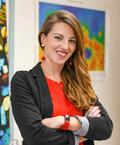
Pamela BurnleyMeet new faculty member Pamela Burnley (Burnley@physics.unlv.edu), 895-2536, BPB 115.

Pamela kindly agreed to respond to a few questions designed to help introduce her to the College of Sciences and the UNLV community.

Why did you choose to come to UNLV?

I believed (correctly) that there would be good opportunities to continue my career and do research at UNLV.  There are a number of people here I can collaborate with and there are excellent research facilities. In addition, I wanted to live in a place where there was a good job for my husband and I wanted to live in the west to be closer to family. 

What has surprised you the most about the campus?

The trees. 

What are your teaching activities and research projects?

I am presently teaching one class per year for Geosciences.  This coming spring I will teach Physical Geology.  I am setting up a high pressure rock deformation laboratory at the High Pressure Science and Engineering Center and I am continuing my research in synchrotron-based high pressure rock deformation, and modeling of rock microstructures.  

Do you consider yourself a geoscientist or a physicist? Does it matter?

I am a geologist. The field that much of my research falls into (mineral physics) is highly interdisciplinary.  Many of my colleagues have degrees from more than one kind of program – many are housed in geoscience programs but have degrees from physics or chemistry somewhere in their background.  Many publish in physics or materials science as well as geoscience, others are more grounded in solid state physics and only occasionally publish on geoscience topics. So in some ways for my research it doesn’t matter what I am.  On the other hand from a cultural point of view, it definitely makes a difference.  For myself as well as many of my friends, being a geologist is a matter of personal identity.  Even if I changed jobs and found myself working totally outside of geoscience I would still be a geologist because I think like one.  I relate to the environment like a geologist, I drive like a geologist (one eye on the roadside) – its who I am.


What is the focus of your research?  What are its implications?

I work on deep earth materials.  We recreate the pressure and temperature of the deep earth in the laboratory and study how earth materials (minerals) behave under those conditions.  My research helps us understand how the solid part of our planet works as well as how other planets work inside. 

How did you develop your interest in geoscience?

I was a lack luster student and didn’t have a clear idea of what I wanted to do in life until I took earth science my first year in high school.  Within weeks of the start of class I knew that I wanted to get a PhD in geology.  All of my life I had been noticing the colors and patterns in rocks, the shape of the landscape and the way running water arranged the sand in the gutter when the snow melted.  Geology gave me words to describe these things and opened up a world of secret knowledge that was completely fascinating to me. 

What do you so in your spare time?

I spend my spare time with my daughter (who is 4) and my husband.  We like to go bike riding/running (big people run, little person bikes), hiking and camping.  I am also enjoying a relatively new hobby in genealogy. 

What books are you reading now?

I am slowly working my way through James Paschal’s memoir and I am reading a lot of Winnie the Pooh, and alphabet books.

What are your future plans?

I plan on having a successful career at UNLV and becoming a valuable member of the Las Vegas community.


Back to Top


New Faculty Member – Assistant Professor Amei Amei

Amei Amei

Meet new faculty member Amei Amei (amie.amei@unlv.edu), 895-5159, CBC B-412.

Amei kindly agreed to respond to a few questions designed to help introduce her to the College of Sciences and the UNLV community

Why did you choose to come to UNLV?

I feel that UNLV is making a great effort to become a research oriented university and, of course, that will provide lots of opportunities for academic researchers.

What has surprised you the most about the campus?

As a new member of campus, I am still surprised by the fact that from various locations on campus I can look up and see some of the Las Vegas Strip properties such as the MGM. It is interesting to be on a university campus and sometimes forget what is only a short distance from here.

What are your teaching activities and research projects?

I am currently teaching one class, Probability Theory. This coming spring I will also teach Biostatistics. My research area is in the intersection of biology and statistics, especially I am interested in population genetics and the statistical inference of stochastic processes.

How did you develop your interest in mathematics?

I found mathematics enjoyable as a very young child and my decision to major in Mathematics in college was a "no-brainer."

What do you so in your spare time?

I like to watch movies and listen to music. I also spent lots of my spare time on the telephone with my parents and sister, who live in China.

What books are you reading now?

I am reading Jeffrey Rosenthal’s Struck by Lightning: The Curious World of Probabilities, a book about probability and randomness in everyday life, intended to inform and entertain readers without requiring any mathematics background.

What are your future plans?

I am looking forward to teaching undergraduates and working with my colleagues in mathematics, and across the university, on interesting research projects. I eventually hope to receive tenure.

What would people be surprised to know about you?

I suppose people might be surprised to know that I do not get tired of people asking me what it is like to have the same first and last name.

Back to Top


Video Clips

UNLV College of Sciences faculty members and their research projects are often the focus of print and media interviews. UNLV Campus Connections, a television program produced by the Office of Public Affairs and UNLV-TV, is 30-minute news magazine show available on Cox Cable channel 110, Sundays at 7:30 p.m. and Mondays at 7 p.m. Enjoy these video presentations of College of Sciences faculty members discussing a variety of research projects.

http://sciences.unlv.edu/videos.html

Jean Cline and Walking Box Ranch

Michelle Elekonich and Honey Bee Research

Adam Simon and Volcano Research

Back to Top


Faculty Publications

School of Life Sciences professor Carl Reiber, associate dean of academic affairs, is the co-author of "Evolution of Cardiovascular Systems" a chapter in: Aird W., ed. Endothelial Biomedicine. Cambridge: Cambridge University Press; 2007: 29-49.

Professor emeritus Wes Niles, School of Life Sciences, is co-author of the publication: Niles, W.E. and P.J. Leary.  2007.  Annotated Checklist of the Vascular Plants of the Spring Mountains, Clark and Nye Counties, Nevada.  Mentzelia: Journal of the Northern Nevada Native Plant Society, 8:1-72.

School of Life Sciences assistant professor Eduardo Robleto, professor Ron Yasbin, staff scientist Christian Ross, and Mario Pedraza-Reyes have published: "Stationary Phase Mutagenesis in B. subtilis: A Paradigm to Study Genetic Diversity Programs in Cells Under Stress," Critical Reviews in Biochemistry and Molecular Biology, 42: 327-339, 2007.

Back to Top


"UNLV Professor Says Climate Change Argument is Over," Rebel Yell,, October 18, 2007

Climate change is something humans, including those who live, work and play in Southern Nevada, must deal with…The global mean temperature has increased one degree Celsius since the 1800s, according to Dr. Stanley D. Smith, professor of life sciences and associate vice president for research at UNLV. The professor added he expects the mean temperature to rise another two to five degrees this century. Hurricanes will become more frequent and more lethal, he added. This will put increasing strain on low-lying regions. "What will happen is what happened to New Orleans," Smith said of coastal regions.

"I suspect by 2050 we will have decided to abandon New Orleans after wasting billions of dollars trying to save it only to have the next hurricane wipe out our efforts," he added. Southern Nevada won’t be buried by seawater or pounded by hurricanes but may still have to confront its own severe difficulties. This hot, dry region may become even hotter and even drier, according to Smith. "It appears that drought will intensify in the southwestern desert over the next several decades," he said. Smith said snow pack may significantly decrease in the Rocky Mountains and Sierra Nevada. "Perhaps to only 20 to 30 percent of today’s levels by the end of this century," he added.

Read the full text.


Back to Top


UNLV Magazine

The Fall 2007 issue of UNLV Magazine, celebrating the university’s 50th anniversary, contains a number of features and news notes about College of Sciences faculty, including Brenda Buck (gesocience), Bing Zhang (physics and astronomy), and Adam Simon (geoscience). In addition, the magazine includes news of a recent NSF study on peer-reviewed scientific publications for the period 1992-2001. UNLV achieved a 99% increase in publications during this time period, ranking fourth in the nation.


Back to Top


Geoscience Seminar

On October 3 2007 at 4:00 p.m. in LFG 102, Dr. Mark Harrison, Director - Institute of Geophysics and Planetary Physics at the University of California, Los Angeles (UCLA) offered a seminar entitled, "Probing Earth's Dark Age: Crust-Water Interactions on Hadean Earth."

Abstract: The Hadean Eon (4.5-4.0 Ga) is the dark age of Earth history; there is no known rock record from this period. However, detrital zircons as old as nearly 4.4 Ga from the Jack Hills, Western Australia, offer unprecedented insights into this formative phase of Earth history.  Recent developments support the view that planetary differentiation at >4.5 Ga included the production of crust and that liquid water was abundant at or near the Earth's surface throughout the Hadean.   A better understanding of the interactions between the Hadean lithosphere and hydrosphere will require new analytical and modeling approaches but represents one of the most fertile areas of geologic research.

Back to Top


Mathematical Sciences Seminar

On Friday, November 2, 2007 the Department of Mathematical Sciences hosted a talk by Dr. Linda Allen from Texas Tech University in the area of mathematical biology entitled, "Emerging Zoonotic Diseases in Wildlife: Metapopulation Models with Multiple Pathogens and Multiple Hosts."

Abstract: Spatial heterogeneity, host demography, multiple hosts and multiple pathogens have had an impact on the emergence, persistence and extinction of diseases in wildlife. Natural or human-made landscape features such as forests, rivers, roads, and crops have resulted in patchy habitats. Pathogens are often capable of infecting multiple hosts, and in addition, many of these pathogens can also be transmitted by multiple hosts. Approximately sixty percent of human pathogens are zoonotic causing diseases such as Lyme disease, influenza, sleeping sickness, rabies, and hantavirus pulmonary syndrome. These multiple hosts provide many avenues for the disease to emerge. We investigate the effects of disease emergence and persistence in mathematical models that include multiple patches, multiple hosts, or multiple pathogens. The basic reproduction number is computed for these models.  In the case of multiple hosts, the basic reproduction number is shown to increase with the number of hosts that can be infected. For multiple patches, the basic reproduction number can be computed in special cases and is bounded below and above by the minimum and maximum patch reproduction numbers, respectively. For multiple pathogens, a reproduction number can be computed for each of the pathogens.  It is shown that competitive dominance by a single pathogen or coexistence of multiple pathogens may occur. The results were illustrated by numerical examples. Implications for disease control were discussed. 

Back to Top


CAMS Colloquia

On Friday, October 5, 2007 from1:00 - 2:00 p.m. in CBC-B 425a Lambis Papelis, Division of Hydrologic Sciences, Desert Research Institute (DRI) and Director, Water Resource Management Graduate Program, UNLV, presented a seminar entitled, "The Case for Collaboration of Hydrogeologists, Environmental Geochemists, and Modelers: Examples from Nevada Related Research Studies."


Abstract:  Current environmental problems are increasingly complex and require the collaboration of scientists from different disciplines. Water resources research is no exception. Except for the simplest applications, addressing the more challenging problems invariably requires the collaboration of scientists and engineers with multiple scientific and engineering backgrounds. Some of the more challenging problems include upscaling issues over several orders of magnitude, from the laboratory to the field scale. Upscaling is further complicated by the physical and chemical heterogeneity of even the more homogeneous natural environments. Similarly, model parameters might also be a function of scale. In addition, selection of the number and location of sampling sites might greatly influence the design of a field study. Such decisions clearly require the use of geostatistics. Finally, the computational requirements for large scale problems, often impose limitations on other input parameters, such as parameters describing geochemical interactions at different scales. In this talk, we will present examples of laboratory and field studies, focusing on environmental problems relevant to Nevada, such as radionuclide and metal ion migration, diffusion of metal ions through rocks, colloid facilitated transport, and effects of urban watershed management programs on the distribution and migration of potential contaminants

On Friday, October 12, 2007 Dr. Yanzhao Cao, Florida A&M University and the School of Computational Sciences, Florida State University presented a talk entitled, "Numerical Solutions of Stochastic Partial Differential Equations," in CBC-113.

Abstract: Using computer simulations, we are now able to study the dependence of computed solutions on variations or uncertainties in the initial data, the forcing terms, or even in the coefficients or the physical properties of the system.  The results of such studies suggest that both natural and engineering phenomena commonly framed in terms of deterministic systems of partial differential equations may be more correctly modeled and deeply understood as stochastic partial differential equations (SPDE's) instead. Stochastic models are more complex than deterministic ones; as part of this complexity, the solution of an SPDE is not simply a function, but rather a stochastic process which expresses the implicit variability of the system.  This is the reason that SPDE's are able to more fully capture the behavior of interesting phenomena; it also means that the corresponding numerical analysis of the model will require new tools to model the systems, produce the solutions, and analyze the information stored within the solutions.

Back to Top


Physics Forums

On Friday October 5th, 2007 at 3:45 p.m. in BPB 217, Dr. Daniel Whalen, Los Alamos National Laboratory presented a talk entitled, "Radiative Feedback: The Photoevaporation of Clustered Minihalos by the First Stars."

Abstract: Very massive primordial stars photoionize and evaporate other dark matter halos in their vicinity to varying degrees, raising the question of whether star formation in them is promoted or suppressed. I will present two-dimensional numerical simulations of the ionization of minihalos proximate to a Pop III star that incorporate photon conserving multifrequency radiation hydrodynamics together with 9-species primordial chemistry. We find that halos with central densities above 2000 cm^-3 are impervious to both ionizing and Lyman-Werner (LW) UV while more diffuse halos with densities below 2 -3 cm^-3 are completely destroyed anywhere within the cluster. Star formation can be accelerated or delayed in halos of intermediate density depending on how the I-front and its shadow compress the core of the halo after the death of the star. Most of the halos are photodissociated but this plays no long term role in the later collapse of their cores because H2 formation is rapidly catalyzed in the warm relic H II region after the death of the star.

On Friday, October 12th, in BPB 217 Dr. Tim Kallman, NASA/GSFC offered a presentation entitled, "'What Can We Learn from Active Galaxy Warm Absorbers?'

Abstract: X-ray spectra of many Seyfert galaxies show evidence for absorption or scattering by gas which is flowing out from the nucleus and which is partially ionized.  That is, light elements such as hydrogen and helium are fully ionized while some bound electrons remain on the abundant heavier elements such as oxygen and iron.  This gas was unknown prior to the advent of X-ray spectroscopy.   Our understanding of warm absorber flows is hindered by the fact that they are probably not spherical. However, spectra from several Seyfert galaxies can be combined in order to provide enough  information about geometry to remove this uncertainty. This  talk summarized the available observational information about these  flows, presented models which allow the mass flux to be estimated, and  discussed the implications for the mass budget and other properties of active galaxies.

Back to Top


School of Life Sciences Seminar

On Friday, October 19th, professor John Helmann, department of microbiology, Corrnell University presented a seminar entitled "Bacterial Adaptations to Metal Ion Limitation." Helmann's research laboratory focuses on antibiotic resistance, oxidative stress, regulation of transcription, and extracellular function sigma factors.

Back to Top


Upcoming Seminars

The College of Sciences has established a listserve to better publicize and promote scientific seminars offered throughout the academic year. For more information on upcoming seminars and to subscribe to the listserve, please visit: http://cmse.unlv.edu/seminar/.

Back to Top


Submit Your News Stories

The College of Sciences E-Newsletter is published on or about the first of each month. Please submit news items via email by the fifteenth of each month, for consideration. You may send your submissions to: Bill Brown, Director of Development william.brown@unlv.edu.

Back to Top


Related Links


Get Adobe Reader